
LINE: Disney Tsum Tsum
LINE (LY Corporation)Puzzle
3.967.84K Reviews
- Version
- 12.9.1
- Installs
- 10.00M
- Age Rating
- Everyone
Screenshots
Our Review of LINE: Disney Tsum Tsum
 Analysis by Appyee
I have always found the best mobile puzzle games are the ones that explain themselves in a few seconds but still give me a reason to return later. LINE: Disney Tsum Tsum fits that idea neatly. It is a free puzzle game from LINE, developed by LY Corporation, built around connecting matching Disney Tsum characters before the short round ends. The characters are cute, the controls are simple, and a spare minute is enough to play.
That simplicity is also the reason it has lasted. This is not a story-heavy adventure or a traditional match-three board. It is a fast, gesture-based game where I focus on spotting groups, drawing chains, and making better decisions under pressure. I can enjoy it casually, but the scoring system gives me room to improve if I want to chase stronger results.
How the current version feels to play
The current version is 12.9.1, and the game remains easy to approach for new players. The age rating is Everyone, which matches the cheerful visual style and uncomplicated premise. I do not need a long tutorial or a complicated control scheme: the central action is immediately readable, and the game is comfortable to play in short sessions.
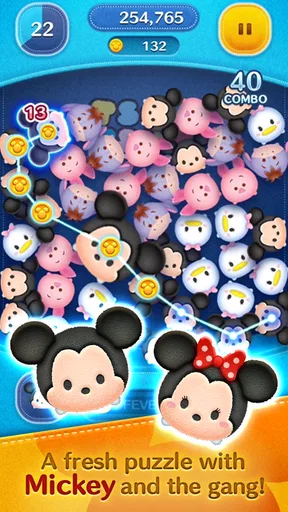
Each round asks me to clear matching Tsum characters by tracing through adjacent pieces. The board constantly changes as pieces disappear and new ones fall into place, so I am not simply repeating one fixed move. I have to decide whether to clear a small group quickly, wait for a longer chain, or create a better arrangement for the next few seconds.
That timing creates the real skill gap. A beginner can make matches almost immediately, while an experienced player pays attention to the whole board instead of staring at one promising cluster. I found that the game rewards keeping my eyes moving. Looking only at the largest group often means missing a safer chain that keeps the board flowing.
The short-round structure makes it useful in everyday situations. I can play while waiting for a train, during a coffee break, or when I want something more active than scrolling. A realistic session might be three or four attempts while waiting for an appointment. The game does not require me to reserve a whole evening, although the desire to improve a score can easily turn a quick break into a longer session.
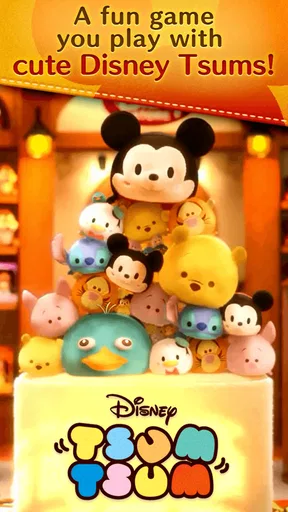
The Disney presentation is important, but it does not replace the puzzle. Familiar characters make the board pleasant to look at, while the quick movement keeps the focus on decisions. I think that balance is why the game can appeal both to Disney fans and to people who normally choose puzzle games for their mechanics rather than their theme.
Why the controls are more demanding than they look
Tracing a chain sounds effortless, yet small mistakes matter when the pace increases. I sometimes begin a promising connection only to break it by moving too quickly or taking an awkward route. The most useful adjustment is to make deliberate, smooth gestures instead of stabbing at individual pieces. A longer chain is not automatically better if it takes too long to complete.
I also learned to avoid treating every round as a race from the first second. The opening board can be useful for setting up a better sequence, and rushing into the first available match may leave a less convenient layout. This is one of the game’s less obvious strengths: it looks like a reflex puzzle, but planning and board awareness gradually become just as important as speed.
For players who use a phone with a smaller screen, the compact pieces can feel crowded during a busy moment. On a larger display, the board is easier to scan, but the game still feels designed for touch rather than for a controller or keyboard. That makes it natural on a phone, though people who prefer slower, more precise puzzle play may find the action a little frantic.
Progression without making every round feel identical
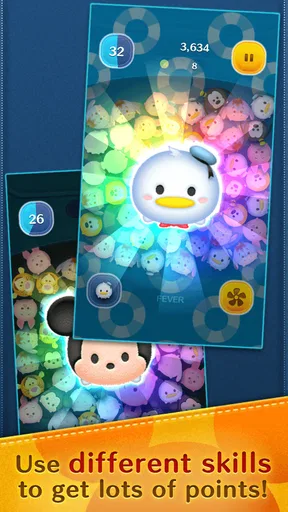
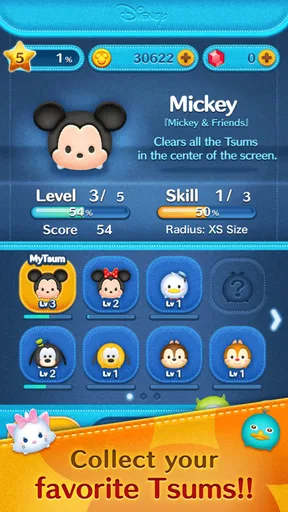
The basic action stays consistent, but the experience does not have to feel completely flat. Different Tsum characters can change how I approach a round, and the attraction is partly in learning which character choices suit my habits. I prefer options that help me maintain a steady rhythm, while another player may value a setup that supports larger clearing opportunities.
This creates a useful trade-off between comfort and experimentation. Sticking with a familiar choice can make my play more reliable, especially when I am trying to complete a particular objective. Trying something different can expose me to a new rhythm and reveal that my usual approach is not always the most efficient one.
One practical tip is to judge a character by how consistently it helps you, not only by one unusually high score. A spectacular round can be exciting, but a dependable setup is more valuable when I am playing several times and trying to improve gradually. That distinction is easy to miss because the game encourages quick, satisfying results.
What has changed and what that means for players
The game was released on June 30, 2014, so it is not a new experiment trying to discover whether this format works. Its continued presence and current version show a product that has been maintained over time rather than abandoned after its initial novelty. I see that evolution most clearly in the fact that the game still presents a familiar core while offering a mature structure for returning players.
For someone installing it today, the main benefit of that history is a more established experience. I am not learning a rough prototype with an uncertain direction; I am stepping into a long-running puzzle title with a recognizable identity. At the same time, a long life can make a game feel busier than a newly designed minimalist puzzler, particularly for a newcomer who wants only one straightforward mode.
The current version number matters mainly as a sign of ongoing product development, not as proof that every older frustration has disappeared. The central loop remains intentionally repetitive: trace, clear, refill, and try to do it better. Updates can keep the surrounding experience current, but they cannot change the fact that the game is built for people who enjoy repeating a compact puzzle with small improvements.
Existing users are likely to appreciate that continuity. If I return after a break, I do not have to relearn an entirely different game. My previous understanding of chain length, timing, and board reading still matters. That makes it easier to pick up again than a puzzle game whose rules change dramatically between visits.
New players should approach it with a different expectation. The game may look like a relaxed Disney collectible experience, but high-level play asks for concentration. I can play casually, yet stronger performance depends on recognizing patterns quickly, managing the board, and making fewer wasted gestures. The cute appearance lowers the barrier to entry, but it does not remove the challenge.
Free to start, with an important spending decision
The game is free to download and play, which makes trying it straightforward. There are in-app purchases priced from $1.99 to $49.99 per item, so the store model deserves attention before anyone gets deeply invested. I would recommend deciding in advance whether I am treating purchases as optional entertainment or as part of regular play.
That boundary matters because a short-session puzzle game can encourage repeated attempts. When I am close to a personal target, it is tempting to spend simply to keep momentum going. My advice is to enjoy the basic loop first and only consider spending after deciding whether the game remains fun without it. If the free experience already feels satisfying, purchases can stay a choice rather than becoming a condition for enjoyment.
Parents should also understand that an Everyone rating describes the content, not the possibility of optional spending. I would still check the device’s purchase controls before handing the game to a child. That is a sensible precaution for any free mobile title with in-app purchases, especially one that is easy to open and play repeatedly.
Where it fits among puzzle alternatives
Compared with a conventional match-three game, this title feels more physical because I draw through pieces instead of swapping two tiles. That makes the interaction faster and gives hand movement a direct role in the result. A match-three alternative is usually better for someone who wants a slower board, more deliberate turns, or a stronger sense of clearing rows and columns.
Compared with a pure endless high-score game, the Disney theme gives this one a warmer personality and a clearer collecting appeal. A minimalist arcade puzzler may offer less visual distraction and a more concentrated competitive experience, while this game is more inviting for people who enjoy recognizable characters alongside the challenge.
It is also different from a traditional logic puzzle. There is no time to sit with one difficult deduction for several minutes. The challenge comes from speed, spatial awareness, and choosing a good route through moving opportunities. If I want calm reasoning without pressure, a sudoku or nonogram app would suit me better. If I want a quick test of attention that feels lively on a touchscreen, this is the stronger fit.
Small habits that improve the experience
My first useful habit is to keep the tracing path simple. A chain that zigzags across the board may look impressive, but an awkward route increases the chance of breaking it. Smooth movement helps me protect consistency, which matters more than chasing a perfect chain every time.
Second, I try to use the early part of a round to read the board rather than instantly clearing whatever is closest. This does not mean waiting so long that opportunities disappear. It means taking a brief look for a route that creates space and keeps several options open. That tiny pause is especially helpful when the board begins in an inconvenient arrangement.
Third, I separate practice sessions from goal sessions. When I am simply learning a character or improving my hand movement, I do not worry about every result. When I am pursuing a target, I use the setup I understand best and avoid changing too many variables at once. This makes progress easier to judge and prevents one unlucky round from changing my whole strategy.
A fourth insight is that comfort affects performance more than I expected. Because rounds are quick, I can play several in a row without noticing how tense my hand has become. Taking a short break after a few attempts helps me return with better control. This is not a game where forcing one exhausted extra round reliably produces a better score.
Who should play it, and who should skip it
I would recommend it to Disney fans who want a game that can be enjoyed in brief bursts, to puzzle players who like improving through repetition, and to families looking for an approachable touchscreen game. It is also a good choice for someone who wants a free starting point rather than committing to a paid puzzle immediately.
I would be more cautious about recommending it to players who dislike timers, repeated attempts, or optional purchases. The visual style is gentle, but the play can become intense when I am trying to perform quickly. Anyone looking for a deep narrative, a large exploration map, or a puzzle that changes completely from one stage to the next should choose another genre.
It may also be a poor match for people who want a fully self-contained experience with no temptation to spend. The free entry is useful, but the purchase range means I need some personal discipline. If I know that near-misses make me spend impulsively, a paid puzzle with a single upfront cost may provide a more comfortable experience.
What I would watch as a returning player
When I return to a long-running game, I look for whether new material supports the original idea or simply adds clutter. Here, the important question is whether future development keeps the quick tracing loop understandable for newcomers while giving experienced players reasons to continue. A healthy balance would preserve the immediate controls without making the surrounding choices feel overwhelming.
I would also watch how well the current version serves two different audiences: casual players who want a cheerful break and dedicated players who care about efficiency. The game works because both can share the same basic action, but too much complexity could make the first group feel lost, while too little variety could make the second group lose interest.
The strongest sign in its favor is that the core remains easy to explain after many years. I can hand the phone to a friend and describe the main gesture quickly. The more difficult question is whether that friend will enjoy repeating the activity after the novelty fades. In my experience, the answer depends less on Disney familiarity than on whether they like chasing small improvements.
With an average rating of 3.9 from around 545 thousand ratings and more than 10 million installs, it clearly has a substantial audience. Those figures suggest broad reach, but they do not guarantee that every player will enjoy its pace or spending model. I would treat them as evidence that the concept works for many people, not as a replacement for considering my own preferences.
LINE: Disney Tsum Tsum is at its best when I want a bright, fast puzzle that fits naturally into spare moments. It combines an inviting Disney presentation with mechanics that reward smoother movement, better board reading, and patient improvement. The free entry makes it easy to test, while the optional purchase structure is the main reason I would encourage a little caution.
My final recommendation is positive, with conditions. Install it if you enjoy short touchscreen challenges, recognizable characters, and the satisfaction of turning a messy board into a strong chain. Skip it if you prefer quiet logic puzzles, dislike timed pressure, or want a game with no recurring temptation to spend. For the right player, it remains a surprisingly skillful little puzzle rather than just a cute character showcase.
Verdict
Strengths of LINE: Disney Tsum Tsum
- Simple tap-and-swipe gameplay is easy to learn for players of all ages.
- Disney and Pixar characters make collecting tsum tsum especially appealing to fans.
- Short rounds work well for quick breaks or casual mobile sessions.
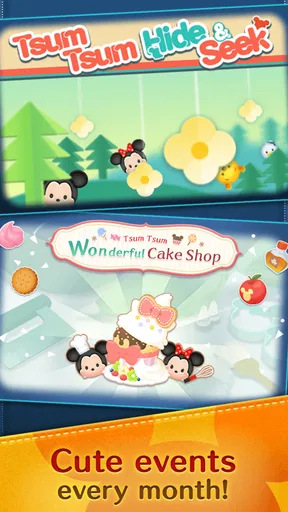
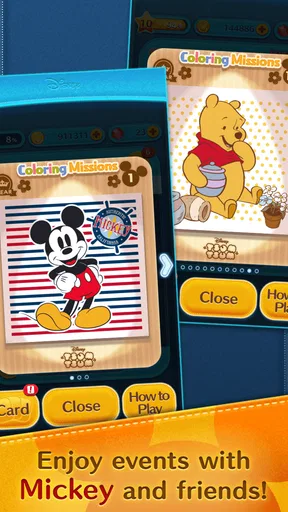
- Regular events and limited characters give longtime players new goals.
- The cheerful visuals and familiar music create a polished Disney atmosphere.
Limitations of LINE: Disney Tsum Tsum
- Energy limits can interrupt play and encourage waiting between sessions.
- Rare tsum tsum may require significant luck, saving, or in-app purchases.
- Later stages can feel difficult without upgrading a strong character collection.
- Frequent events may feel overwhelming for players who prefer relaxed progress.
- The game requires an internet connection for many features and updates.
Other Releases by LINE (LY Corporation)
View All
LINE: Calls & Messages
Communication3.1
Similar Picks in This Category
View All
Block Blast!
HungryStudio4.8

Braindom: Brain Games Test
Lahana Game Studio4.6

AMAZE!
CrazyLabs LTD4.6

Sudoku - Classic Sudoku Puzzle
Oakever Games4.7

Art Puzzle - Puzzle Games
Easybrain4.8

Amaze GO!
Oakever Games4.9
Frequently Asked Questions
What is LINE: Disney Tsum Tsum?
LINE: Disney Tsum Tsum is a casual match-three puzzle game featuring adorable Disney and Pixar characters shaped like plush toys. During each timed round, you connect three or more matching Tsum figures to clear them from the board, create combos, and earn coins. Each character has a unique skill, so choosing the right Tsum can make a noticeable difference in your score and strategy.
Is LINE: Disney Tsum Tsum free to download and play?
Yes, LINE: Disney Tsum Tsum is free to download and play on compatible Android and iOS devices. However, it includes optional in-app purchases for items such as premium currency, capsules, boosts, and other resources. You can progress without spending money, although collecting specific characters or improving your roster may take more time when playing entirely for free.
Does LINE: Disney Tsum Tsum require an internet connection?
An internet connection is generally required for the best experience, including signing in, receiving events, accessing rankings, updating content, and making purchases. Some gameplay may appear to work temporarily when offline, but features can be limited and progress may not synchronize correctly. For this reason, a stable Wi-Fi or mobile data connection is recommended.
Can I play LINE: Disney Tsum Tsum with friends?
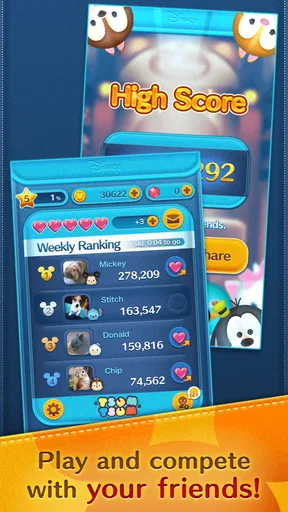
The game includes social features that allow you to connect with friends, exchange certain in-game rewards, compare scores, and participate in ranking-related activities. These features can make the experience more engaging, especially if several people in your contact list also play. Availability may depend on your region, account setup, and the permissions granted to the app.
Is LINE: Disney Tsum Tsum suitable for children?
LINE: Disney Tsum Tsum is easy to understand and generally suitable for players who enjoy colorful, family-friendly puzzle games. Nevertheless, parents should be aware that the app contains optional purchases, timed events, advertisements or promotional content depending on the version, and social connectivity features. Reviewing device purchase controls and privacy settings is advisable before allowing younger children to play.
Play our best games!


